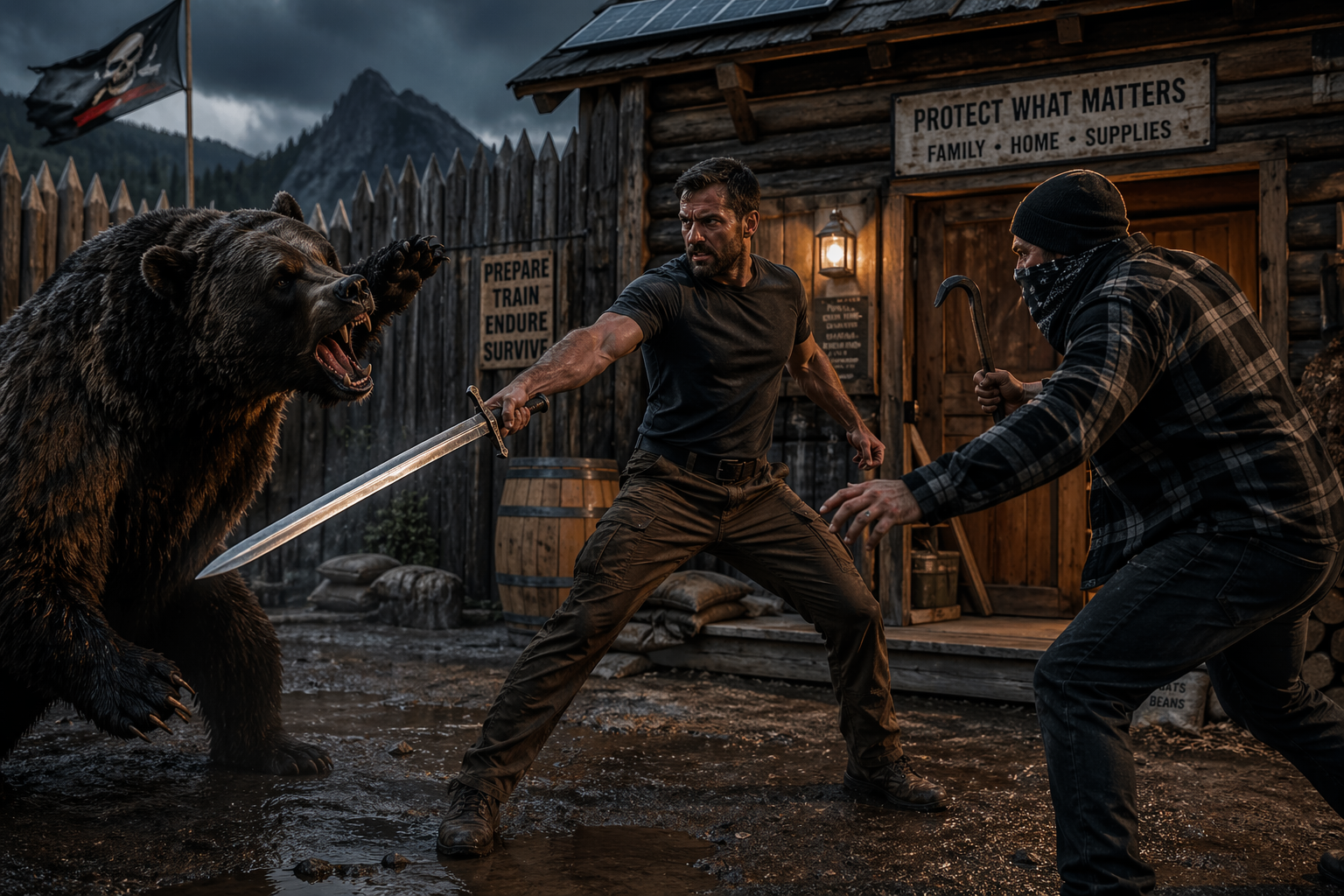
No Power. No Police. No Peace?
How to Protect Your Family and Supplies After a Disaster (With 3 Months to Prepare)
When the lights go out for days—or weeks—people change.
A major blackout, hurricane, wildfire, earthquake, or grid failure can create panic fast. Gas stations close. Stores empty. Phones die. Desperate people start looking for easy targets.
The families who stay safest usually aren’t the strongest.
They’re the most prepared, organized, and hardest to target.
If you had 3 months to prepare, here’s how to make your home and family a much tougher target.
Rule #1: Don’t Look Like the Best Target
Criminals and desperate people often choose easy wins.
Avoid signaling that you have supplies:
- Don’t brag about prep online or to neighbors
- Keep deliveries discreet
- Use curtains / blackout coverings at night
- Keep generators hidden and muffled
- Avoid loud parties or obvious abundance during shortages
Gray man principle: blend in.
Rule #2: Harden the Home
You’re buying time and discouraging entry.
Smart upgrades:
- Reinforced door strike plates
- Longer hinge screws
- Window security film
- Motion lights (solar)
- Fencing / locked gates
- Thorny landscaping under windows
- Cameras with battery backup
- Loud alarms / sirens
Even basic upgrades can push trouble elsewhere.
Rule #3: Build Layers of Security
Think rings:
Outer Ring
Street awareness, neighbors, gates, visibility
Middle Ring
Yard, lighting, cameras, dogs, fencing
Inner Ring
Doors, windows, family safe room, communication plan
Layers beat one expensive gadget.
Rule #4: Community Beats Lone Wolf
One house alone is vulnerable. Good neighbors are force multipliers.
Build now:
- Meet nearby families
- Share contact info
- Identify skills (nurse, electrician, mechanic)
- Create check-in plans
- Watch each other’s homes
Neighborhoods that cooperate are harder to exploit.
Rule #5: Store Supplies Smart
Don’t keep everything in one obvious place.
Better plan:
- Main pantry
- Hidden backup food cache
- Separate water storage
- Vehicle emergency kit
- Grab-and-go bags
Redundancy matters.
Rule #6: Light Discipline at Night
If everyone is dark and your house glows like a casino, you become interesting.
Use:
- blackout curtains
- red low-light lamps
- covered lanterns
- room-only lighting
Rule #7: Have a Family Plan
Everyone should know:
- Where to meet
- What room is safest
- Who grabs kids / pets
- How to communicate if separated
- What to do if someone knocks late
Plans reduce panic.
Rule #8: 3-Month Prep Checklist
Security
- Door hardware
- Window film
- Solar lights
- Cameras
- Radios
- Spare locks
Supplies
- Water
- Shelf-stable food
- Medical kits
- Hygiene
- Power banks
- Fuel (where legal and safe)
Family
- Drills
- Contact list
- Roles
- Stress management
Biggest Truth Most Miss
Security is not just weapons or muscle.
It’s:
- planning
- discipline
- discretion
- relationships
- barriers
- communication
- calm under stress
Final Thought
When disasters hit, many people become reactive.
The prepared family becomes steady.
You don’t need to look dangerous. You need to be difficult to exploit.
