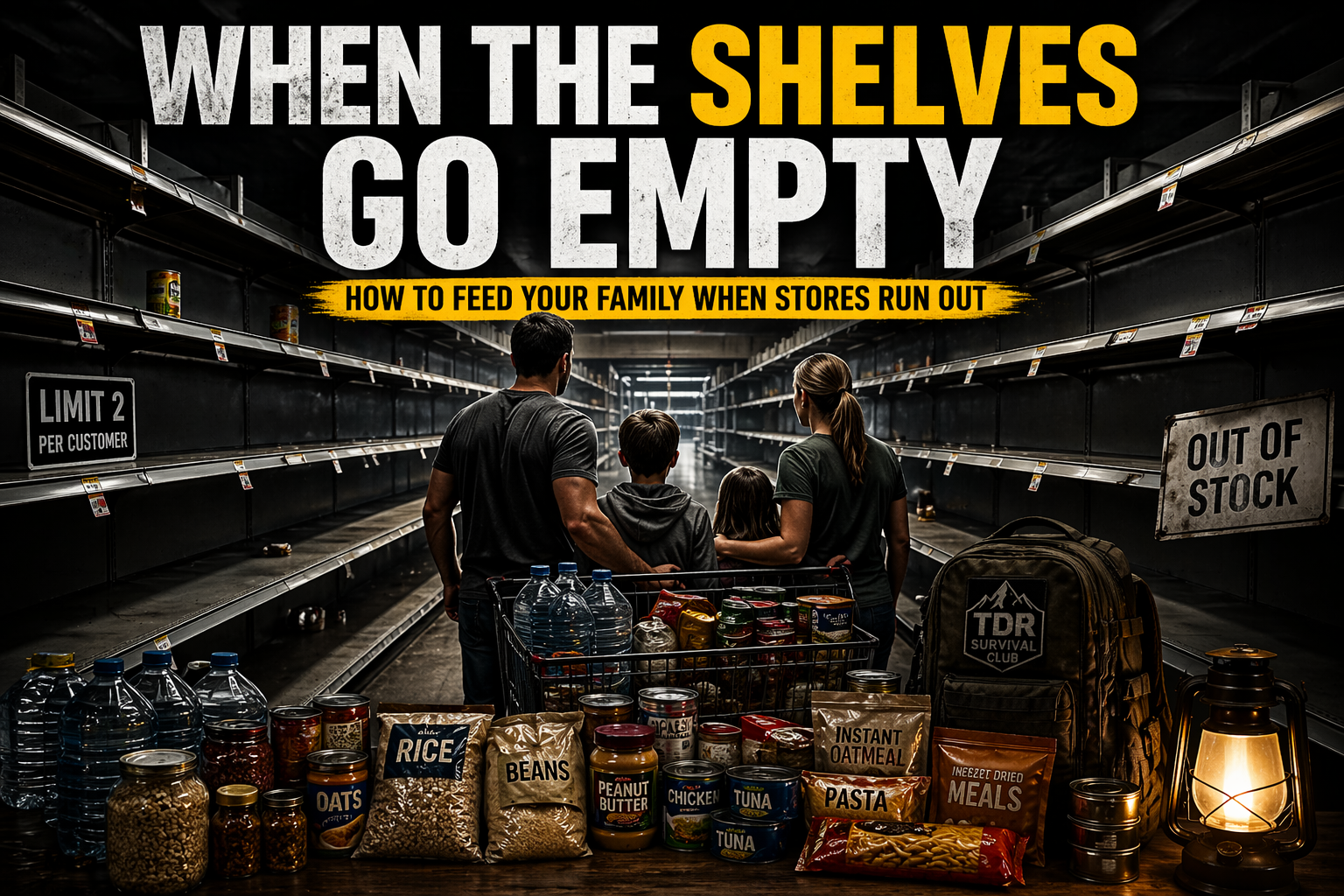
When the Shelves Go Empty
How to Feed Your Family When Stores Run Out
Most people think grocery stores are permanent.
They’re not.
A storm, cyberattack, trucking shutdown, power failure, panic buying event, or major disaster can strip shelves faster than most families imagine. In many emergencies, the food problem begins in hours—not weeks.
When deliveries stop, prices rise, and shelves empty, the prepared family stays calm.
If you had 4 months to prepare, this is how smart people would build food security.
Rule #1: Buy What You Already Eat
Do not build a pantry full of food nobody wants.
Start with foods your family already uses:
- Rice
- Pasta
- Oats
- Beans
- Peanut butter
- Canned meats
- Soups
- Sauces
- Crackers
- Coffee / tea
- Snacks kids actually eat
Prepared food only helps if people will eat it.
Rule #2: Build in Layers
Layer 1: Daily Pantry
Food you rotate weekly.
Layer 2: 30-Day Backup
Shelf-stable reserves.
Layer 3: 90-Day Core Supply
Longer-term staples and emergency meals.
Layer 4: Skills
Cooking, rationing, substitutions.
Food security is systems, not one shopping trip.
Rule #3: Calories Matter
In stress, people often under-estimate how much food they need.
Children, labor, heat, cold, stress, and activity all increase demand.
Focus on foods that store well and provide useful calories:
- Rice
- Pasta
- Beans
- Lentils
- Oats
- Nut butters
- Oils
- Canned proteins
Rule #4: Protect Morale Food
Not every item must be survival perfect.
Store comfort items:
- Chocolate
- Candy
- Coffee
- Drink mixes
- Seasonings
- Favorite snacks
Morale is real fuel.
Rule #5: Learn to Cook Without the Kitchen
If power fails, microwave habits die.
Prepare:
- Propane camp stove (use safely and according to instructions)
- Outdoor grill
- Solar oven
- Charcoal options
- Manual can opener
- Matches / lighters
Cooking ability turns supplies into meals.
Rule #6: Water + Food Are Married
Dry food without water becomes a problem.
Rice, beans, pasta, oats, freeze-dried meals all need water.
Always plan food and water together.
Rule #7: Hidden Risk = Waste
Food expires, pests happen, and people overbuy nonsense.
Prevent this:
- Rotate oldest first
- Label dates
- Use sealed bins
- Keep cool and dry
- Inspect monthly
Rule #8: Think Trade and Community
Extra food items can become valuable.
Examples:
- Coffee
- Sugar
- Salt
- Spices
- Shelf milk
- Canned goods
Relationships plus supplies beat isolation.
4-Month Family Food Plan
Month 1:
Build 2 weeks of extra food.
Month 2:
Reach 30 days.
Month 3:
Add cooking backups and comfort foods.
Month 4:
Push toward 60–90 days where practical.
Biggest Truth Most Ignore
Starving families do not care about your opinions.
They care who prepared.
Final Thought
Most people trust the next truck delivery.
Prepared families trust the pantry they built themselves.
When the shelves go empty, preparation becomes peace.
